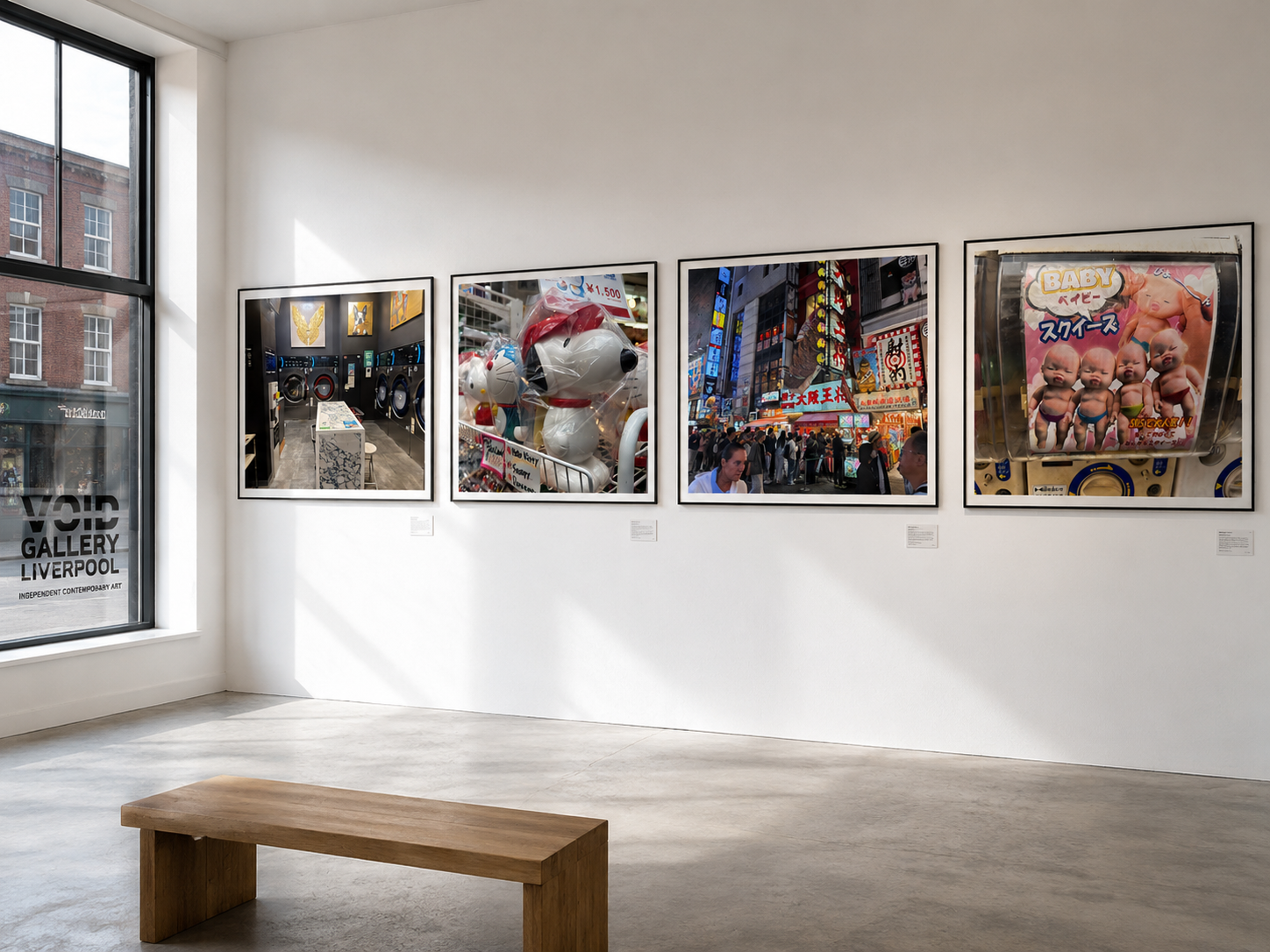
There is a fatigue that settles in when every artwork is introduced by its social purpose before anyone has had the chance to look, listen, sense, or respond. Before the work has opened itself to perception, it is already explained as a contribution to inclusion, representation, wellbeing, civic dialogue, decolonisation, place-making, community cohesion, trauma recovery, or social justice. The audience is not asked first to encounter the work, but to understand why the work has been institutionally justified.
This is not an argument against art having social meaning. Art has always carried social meaning. It emerges from conditions of life, from conflict, craft, memory, rhythm, loss, hope, place, desire and unease. Nor is it an argument against participatory or community arts practice, much of which has created important spaces for people who would otherwise be excluded from cultural production. The problem is narrower, but increasingly unavoidable. Too much art is now being framed as a form of social intervention, and not enough attention is being given to art as aesthetic experience.
The gallery wall text, the funding application, the community impact statement and the institutional press release now often arrive before the work itself. They tell us what the work is doing socially, politically or ethically. They tell us who is represented, which voices are being platformed, which communities are being centred, which structural issues are being addressed. What they less often do is clear a space for the direct interactive encounter between the work and the viewer. The encounter is pre-loaded. The work has already been interpreted before it has been experienced.
In this way, art risks being reduced to a sociological and political function. It becomes evidence of an institution’s values, a demonstration of representational balance, a device for policy delivery, or a visible marker of social responsibility. The work is not asked to disturb perception, intensify feeling, reconfigure form, or open the viewer to an impression that cannot be paraphrased. It is asked to prove that the right conversations are being held by the right people in the right institutional language.
This is where socially informed arts practice, for all its ethical seriousness, has reached a point of diminishing return. Its vocabulary has become heavy with contextual justification. The artist is increasingly introduced through their social location before their aesthetic practice. Their identity, status, background and intersectional position in the habitus become part of the critical apparatus through which the work is licensed. Who gets to speak, exhibit, perform and be seen are important questions, but they have begun to crowd out other questions. What is being perceived? What is being formed? What is being felt? What kind of attention does this work demand? What happens to us when we stand before it without being told in advance how virtuous our response ought to be?
Representation matters. But representation cannot become the organising principle of all aesthetic judgement. When it does, the work is at risk of being judged less by the force of its form than by the social correctness of its authorship. The artist becomes a bearer of position before they are allowed to be a maker of experience. Their work becomes legible as testimony, advocacy or symbolic inclusion, but not necessarily as art. This is not liberation. It is another kind of capture.
John Dewey offers a useful corrective. In Art as Experience, Dewey does not separate art from life. He does not defend the isolated art object, sealed away from ordinary existence. On the contrary, he argues that art grows from the conditions of lived experience. But Dewey’s point is not that art should become social commentary. His point is that art is a heightened and integrated form of experience. It gathers doing and undergoing, perception and feeling, movement and fulfilment. Art matters because it gives form to experience in such a way that experience becomes more vivid, more coherent, more alive.
Dewey is especially important because he refuses to treat emotion as decoration. Emotion is not an added subjective reaction placed on top of a work. It is part of the organising force of experience itself. Affect, impression and emotion are not incidental to art; they are central to the way an experience becomes whole. The aesthetic is not merely what we think about a work after we have decoded its context. It is what happens when perception is intensified, when the senses and the imagination are brought into relation, when feeling becomes articulate without needing to become a slogan.
This is where Carl Jung can also help us recover something that socially informed practice is in danger of forgetting. Jung’s understanding of feeling is not simply sentiment or emotional display. Feeling is a mode of valuation, a way of registering significance. It is how we apprehend whether something matters, whether it carries weight, whether it touches the psyche before it can be explained by concept or programme. In aesthetic practice, this matters profoundly. Art does not only tell us what society is. It discloses what experience feels like from within.
That inner dimension is being neglected. The contemporary arts world is often highly articulate about structure, power, access, identity and representation. It is less confident in speaking about beauty, form, atmosphere, intuition, ambiguity, symbolic resonance, psychic disturbance, enchantment, grief, erotic charge, terror, play, sublimity or joy. These are not soft concerns. They are not evasions from politics. They are the substance of aesthetic life. If art cannot make room for them, then it has surrendered too much of its own ground.
The irony is that socially engaged practice often claims to oppose instrumental thinking, yet it has become deeply instrumentalised. Art is asked to repair civic fragmentation, improve wellbeing, regenerate places, build confidence, address inequality, amplify marginalised voices, create dialogue, develop skills, support mental health, produce belonging and demonstrate measurable impact. This is too much to ask of art. It is also too convenient for institutions and funders who would rather commission a project than alter the material conditions that produce exclusion in the first place.
Art cannot fix a plethora of social problems. It can reveal them, refract them, symbolise them, intensify our perception of them, and sometimes create temporary forms of shared attention around them. But it cannot substitute for housing policy, social care, education, employment rights, public health, democratic renewal or economic justice. When art is asked to carry these burdens, it becomes over-explained and under-experienced. It is made responsible for outcomes that properly belong elsewhere.
There is also a cost to artists. The demand that artists justify themselves through social relevance narrows the field of experiment. It rewards legibility over risk. It favours practices that can be narrated in the language of inclusion and impact. It makes it easier to support work that arrives with a recognisable moral framework, and harder to support work that is strange, formally difficult, inward, excessive, obscure, comic, unresolved or aesthetically disobedient. The result is not more freedom, but a more refined form of conformity.
Community arts and participatory practices do not need to be abandoned. They need to be released from the expectation that their value lies chiefly in their social function. A community choir is not important only because it reduces loneliness. A mural is not important only because it expresses local identity. A workshop is not important only because it builds confidence. A performance is not important only because it gives voice. These things may be true, but they are not the whole truth. The aesthetic encounter still matters. The pulse, colour, sound, gesture, texture, rhythm, image and felt atmosphere matter.
It may be time to move on from the dominance of socially informed justification. Not because society does not matter, but because art matters in ways that are not exhausted by social explanation. The question is not whether art is social or aesthetic. It is always both. The question is which mode is being allowed to lead. At present, the social frame too often arrives first and remains in control. The aesthetic experience is permitted, but only after it has passed through the gate of contextual approval.
A renewed practice would begin differently. It would make space for encounter before explanation. It would trust viewers to perceive, feel and reflect without being managed by institutional framing. It would allow artists to work from intuition, form, sensation and psychic necessity, not only from social positioning. It would recognise that feeling is not a lesser category than critique. It would understand, with Dewey, that art is a reorganisation of experience, and with Jung, that feeling is a way of knowing what has value.
There is a weariness now with art that arrives already justified. The more it explains its social purpose, the less room it sometimes leaves for experience. We need fewer projects that tell us what they are solving, and more works that deepen our capacity to perceive. We need less art as managed commentary, and more art as aesthetic encounter. Not art withdrawn from the world, but art returned to experience before it is reduced to a function.
Leave a Reply