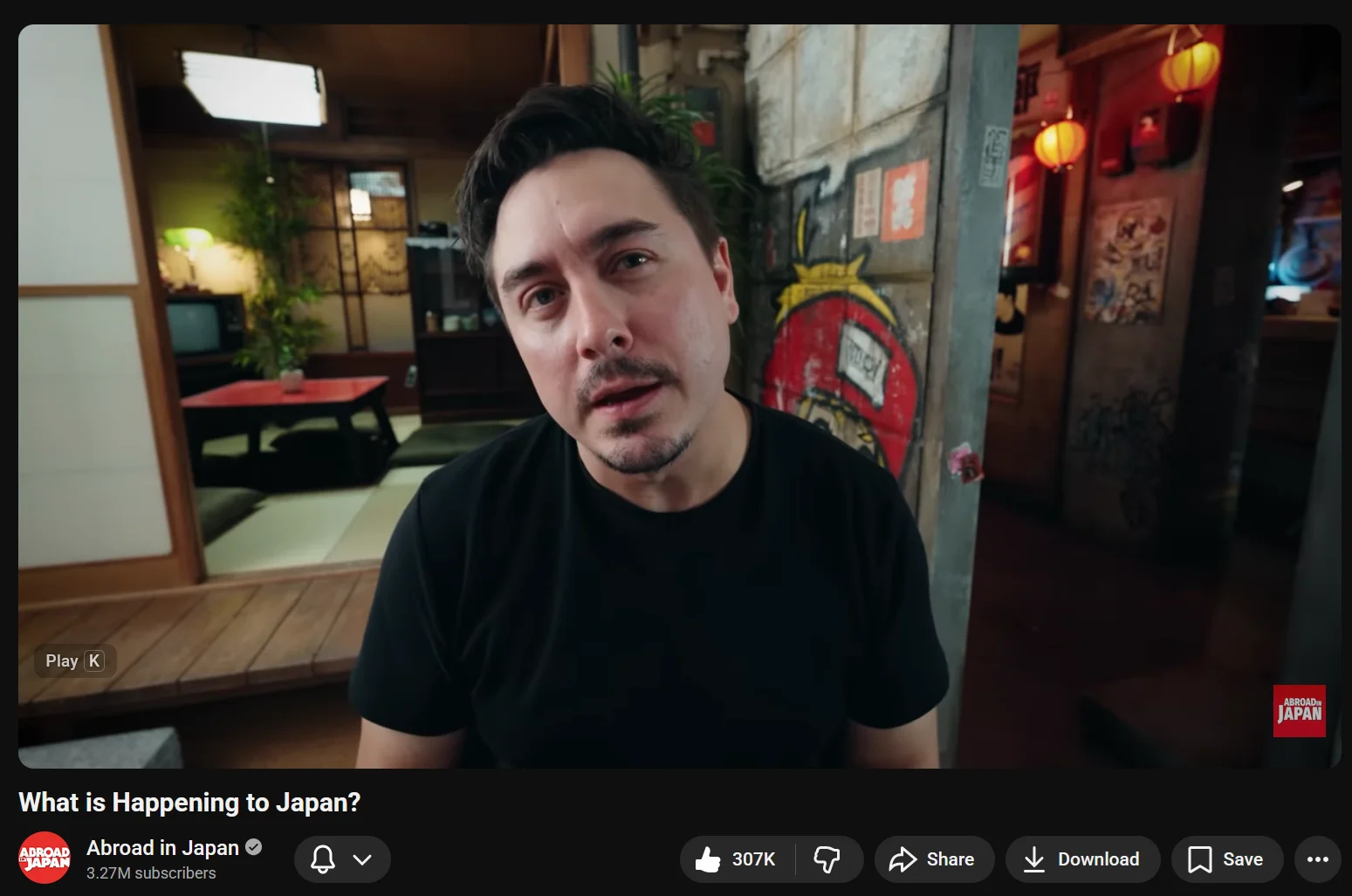
During my first visit to Japan, I’ve been struck by how everyday civility contrasts with the UK’s growing discord. Chris Broad’s reflections on social media rage and click-bait highlight how short-form video culture manipulates emotion and fragments public life. His thoughtful approach offers a counterpoint to the relentless churn of outrage, prompting questions about what Japanese people might see when they look toward a UK increasingly defined by noise rather than understanding.
My first days in Japan have been filled with the simple rituals of arrival. Learning how to move with people who queue without complaint. Listening to the cadence of station announcements that guide rather than bark. Watching how small courtesies hold a shared space together. These are not exotic details. They are clues about how social identity is sustained and how cohesion is renewed in ordinary life.
Against this background, I have been thinking about the online economy that rewards outrage and friction. Chris Broad’s recent critique of short-form “rage” and click-baiting struck a nerve. He calls out the manipulation that thrives on selective framing, on filming vulnerability without consent, and on a diet of jump cuts that never pause long enough to let reality make sense. The argument is not that spectacle is new, but that the present emphasis on reels and shorts has tipped from playful editing into a structural dependency. It squeezes attention into conflict. It turns public life into bait.
There is only so long that an audience will tolerate being worked over in this way. At some point, people register the pattern and push back. You can sense it in the comments that ask for context, or in the fatigue that settles when every street must be a scandal and every local difficulty must be a crisis. The reaction is not puritanical. It is a basic demand to be treated as more than a metric, to be addressed as a citizen rather than a customer of adrenaline. If we care about culture, we should care about the forms that carry it, and what those forms train us to expect from one another.
Chris Broad’s videos help because they welcome ambivalence. The tone is amenable, the pacing is human, and the topics are chosen for what they reveal rather than what they can inflame. He is not naïve about thumbnails or the need to compete for clicks. He is explicit that this is the price of entry. Yet he tries to use that entry to say something that lasts for more than a minute. This is a small but real act of service. It protects room for reflection.
Walking through Japan for the first time, I am learning as much about the UK as I am about here. The contrast throws our fragmentation into relief. If everyday cooperation is a craft, then too much of our public conversation has been outsourced to formats that erode that craft. We have normalised a discordant tone that mistakes volume for presence and insult for scrutiny. We are not short of talent or goodwill. We are short of spaces that reward them.
This raises a question I cannot ignore. What do people in Japan make of us when they look back across the Channel. If they meet us primarily through clips tuned to friction, do they see a hospitable country. Do they see a society that can still hold disagreement without contempt. Do they see neighbours arriving with curiosity rather than a demand to be seen. It is uncomfortable to ask, but it feels necessary. The answer will not be found in a reel. It will be found in what we choose to make together, and in the patience we give each other while we make it.
Endnotes
[1] Chris Broad, Abroad in Japan. Commentary on the attention economy, short-form “rage,” and click-bait practices, including reflections on filming ethics and the platform incentives that drive sensationalism.
Leave a Reply