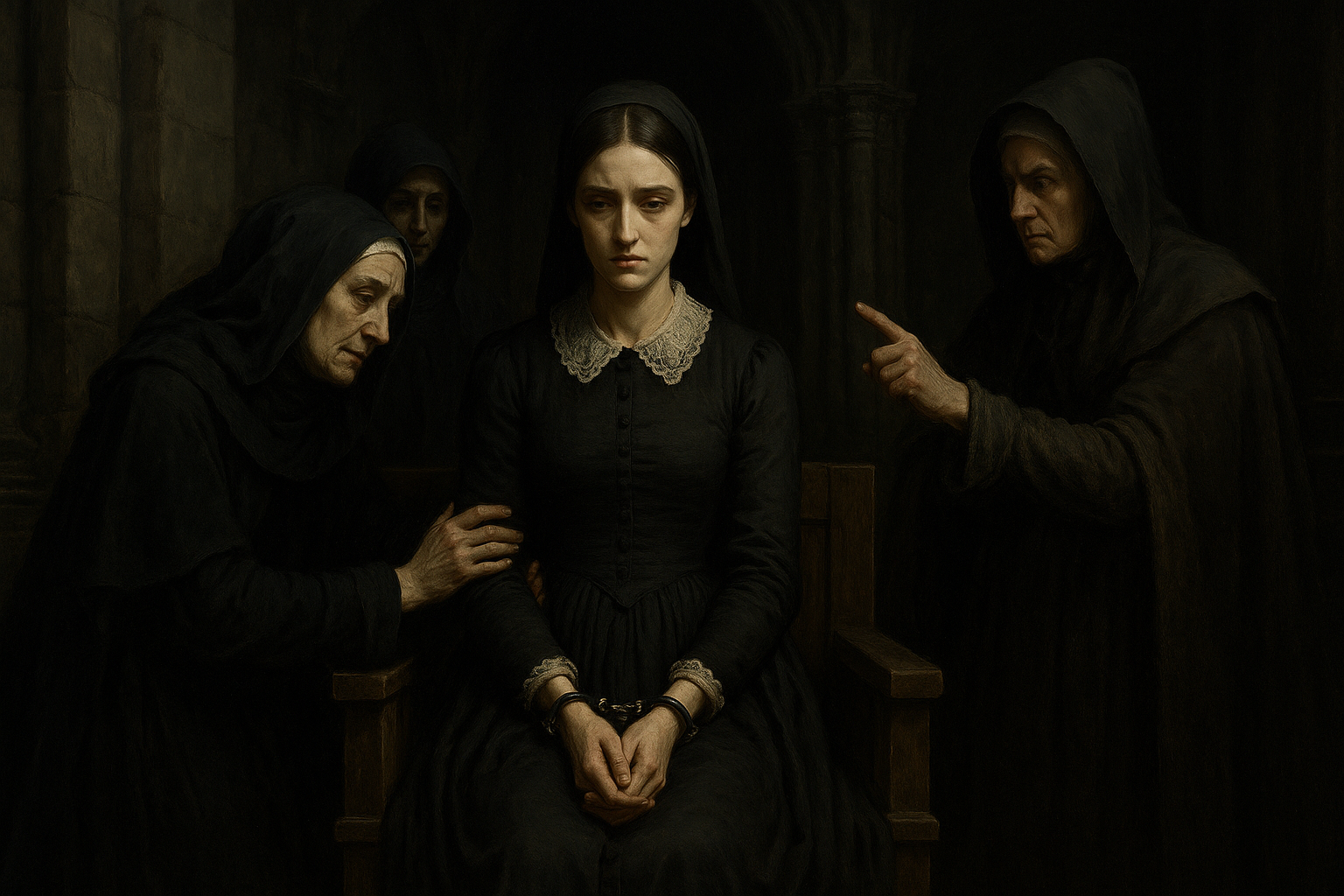
What does virtue really mean in Western culture—authentic moral depth or a performance for social approval? How do Nietzsche’s critique of herd morality and Jung’s call for shadow integration help us rethink virtue signalling today? Can confronting our collective shadow transform hypocrisy into wholeness?
The question of virtue is not a new one, but in the light of current debates, it feels particularly pressing. What is virtue when it is displayed, enforced, and performed in the public sphere? What does it mean when acts of moral affirmation—so visible in our digital age—become mechanisms of control rather than pathways to authenticity? These questions echo through Western thought, and two voices stand out as particularly resonant: Friedrich Nietzsche and Carl Jung. Both critiqued the moral structures of their time, yet from different vantage points—Nietzsche through a genealogical unmasking of moral values as instruments of power, and Jung through a depth-psychological exploration of the unconscious forces that animate our ideals.
This reflection began as I followed the ongoing Sandie Peggie Employment Tribunal, a case that seems to crystallise the tensions between institutional norms, individual conscience, and public virtue. Peggie’s challenge to workplace policies on gender and privacy has unfolded not only as a legal contest but as a symbolic drama: the collision of an official narrative of inclusion with the lived realities of dissent. Watching the live updates on X, I was struck by the pattern Nietzsche would recognise as herd morality at work, where ideals of equity become dogma, and deviation from them invites condemnation. Here, virtue is less about inner disposition and more about compliance—measured, policed, and displayed as a sign of belonging.
Nietzsche saw this dynamic long ago. In his genealogy of morals, he traced the shift from “master morality,” which prized strength and self-assertion, to “slave morality,” which elevated humility and pity as supreme virtues. For him, this inversion was born from ressentiment—the bitterness of the weak who, unable to wield power directly, moralised their impotence into goodness. In our culture, virtues such as kindness and inclusivity often appear as self-evident goods, but Nietzsche would ask: whose power do they serve, and at what cost? His answer was unsettling: these virtues, now universalised, function to level difference, suppressing the possibility of the “higher type”—the individual capable of creating new values. Beneath the moral posturing, Nietzsche detected envy, fear, and the will to control, all dressed in the language of compassion.
For Jung, the problem was not ressentiment but repression and compartmentalisation of the psyche. Where Nietzsche diagnosed a cultural pathology rooted in inverted power relations, Jung looked to the psychic economy of the individual and the collective. He understood morality as an archetypal necessity, yet saw Western ideals as one-sided, exalting light and goodness while exiling instinct and shadow. The virtues we prize—humility, patience, selflessness—are not in themselves harmful, but when absolutised, they split the psyche, pushing the darker energies underground. These forces do not vanish; they return as projection, hypocrisy, or neurosis. In Jung’s words, “Until you make the unconscious conscious, it will direct your life, and you will call it fate.” Our age, saturated with moral signalling, may, in fact, be haunted by what it most seeks to deny.
Virtue signalling, then, is not a trivial phenomenon of social media. It is the modern guise of the persona—the mask we wear to secure acceptance. Jung warned that the persona, when inflated, conceals the true self and invites shadow eruptions. The louder the declaration of purity, the deeper the disowned impulses. Nietzsche anticipated this too: “Moral judgments,” he wrote, “are the favourite revenge of the spiritually limited.” Both thinkers converge here—at the recognition that what passes for virtue often disguises something unacknowledged, whether will to power or unconscious rage.
The policing of virtue follows naturally. If morality is upheld through performance, then deviation cannot be tolerated. Nietzsche saw this as herd instinct—the enforcement of sameness through shame and law, ensuring no one rises above the level plain of mediocrity. Jung saw it as collective repression—the attempt to stabilise culture by silencing its shadow, even as the unintegrated forces accumulate below. The cost is high: conformity at the expense of individuality, social fragmentation masked by compulsory solidarity, and an ethical climate where fear replaces freedom.
What, then, is the alternative? For Nietzsche, it was the revaluation of values, the courage to create meaning beyond inherited norms. For Jung, it was individuation—the slow, often painful work of integrating the shadow, embracing complexity, and becoming whole. Both pathways resist the comfort of herd morality and the seduction of persona. They call us to an honesty that is neither punitive nor performative, a moral consciousness grounded not in display but in depth.
Perhaps this is what our cultural moment requires: not louder proclamations of virtue, nor harsher mechanisms of enforcement, but a deeper conversation—one that begins within, where the battle between light and shadow is first fought. In tending that inner fire, we may find the resources to engage others with integrity, empathy, and courage. And maybe then the question shifts: from “How do we appear virtuous?” to “How do we live truthfully?”—a question that resists easy answers, yet invites the very transformation both Nietzsche and Jung believed possible.
Leave a Reply