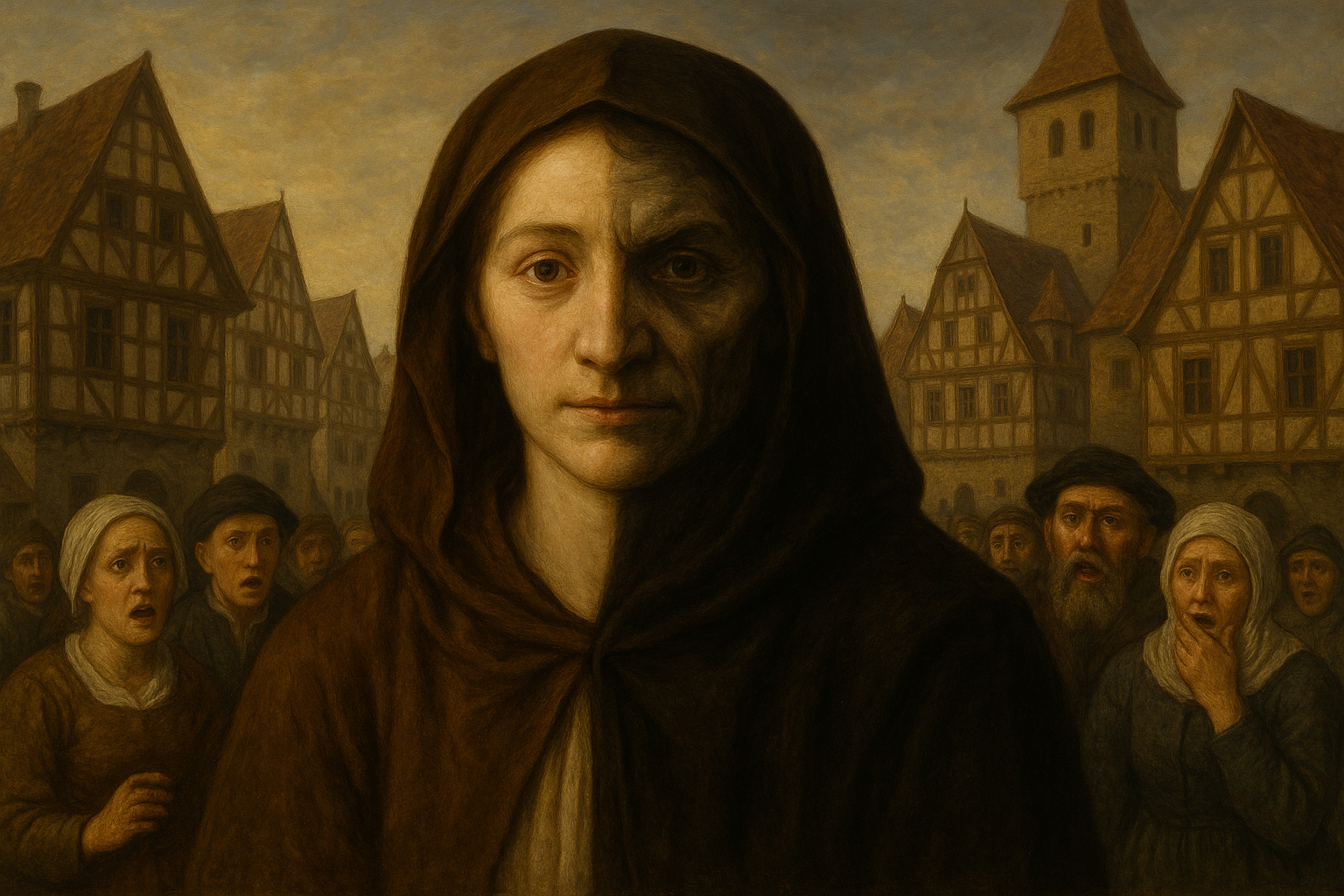
In a previous post, I explored how Freudian psychodynamics might be used to frame the emergence of trans-identification as a cultural phenomenon. Freud’s model of repression, regression, and the working-through of childhood development stages remains insightful in many respects—especially when it comes to understanding guilt, trauma, and power drives. But the Freudian lens can also become too narrow, particularly when the psyche is treated as a system of fixations and neuroses to be corrected, rather than as a symbolic and imaginative space from which new forms of identity and consciousness may emerge.
This is where the Jungian perspective offers something more encompassing. Jung did not see psychic struggles as mere evidence of failed repression or libidinal dysfunction. Instead, he viewed such inner conflict as part of a deeper archetypal drama—the tension of opposites seeking integration. At the heart of individuation lies not the expulsion of uncomfortable desires, but their transformation through symbolic awareness and relational creativity.
In today’s emotionally charged debates around gender and identity, we are witnessing a widespread loss of meaning. The archetypes that once grounded us—God, Nature, the Self—have receded. We now live in what McLuhan termed the “global village”: a world of total communication, flooded with competing signals, memes, and fragments of narrative. The boundaries that once held our sense of identity in place have dissolved, leaving many to turn inward—not as a self-reflective luxury, but as an existential necessity.
For some, this manifests as a desire to reimagine or reconfigure their sexed embodiment. But this act is not always a rejection of biology or a narcissistic delusion, as some culture warriors claim. More often, it is a symbolic struggle to make meaning of complex, unconscious material that is no longer content to remain hidden. When the animus or anima is neglected or projected, and when collective cultural scripts no longer offer coherence or resonance, individuals seek new mythologies—often through their own flesh.
Jordan Peterson’s warnings about the dangers of narcissism, Machiavellianism, psychopathy, and sadism—the so-called Dark Tetrad—have some validity in our age of online trolling, virtue-signalling, and psychological fragmentation. But we must be cautious not to mistake the signs of psychic distress for malicious intent. These traits can indeed be destructive when left unexamined. They are expressions of a shadow that has become autonomous, no longer integrated with the ego or oriented towards healing. Yet to fixate solely on repression or moral weakness misses the symbolic message such traits often carry: a cry for wholeness amidst existential disorientation.
Take, for instance, the case of JK Rowling. Her public stance on gender identity has been both defended and condemned in equal measure. But what if the cultural reaction to her position—whether in demonisation or deification—reveals a deeper psychological split? Rowling seems to represent an unresolved conflict around the feminine, not as a fully integrated archetype, but as a fixed and embattled identity. Her critics, meanwhile, sometimes seem caught in a similar projection: rejecting the very autonomy of female subjectivity in their quest for gender transcendence. In both cases, the psyche has become one-sided—driven not by integration, but by the desire to assert or deny power.
This is the terrain where the Dark Tetrad traits become most dangerous. When thinking, logic, and assertion dominate without the balancing forces of feeling and intuition, the psyche becomes brittle. It lashes out. It objectifies. It seeks control. But the Jungian way teaches us to turn toward the symbol, toward the dream, toward the intuitive rhythms that cannot be measured but can be felt. It is in the numinous, the ambiguous, and the deeply personal that we find the path to integration.
To address the psychosocial crisis of identity we are now experiencing, we must go beyond sensemaking and rational debate. We must attend to the psychic wounds that lie beneath. We must cultivate imagination, patience, and the willingness to feel through the contradictions. Only then can we begin to resolve the tension of opposites—not by choosing one pole over the other, but by allowing a third, transcendent function to emerge.
That is the task of depth psychology in our time: not to explain away the struggle, but to walk with it symbolically, creatively, and compassionately.
Leave a Reply