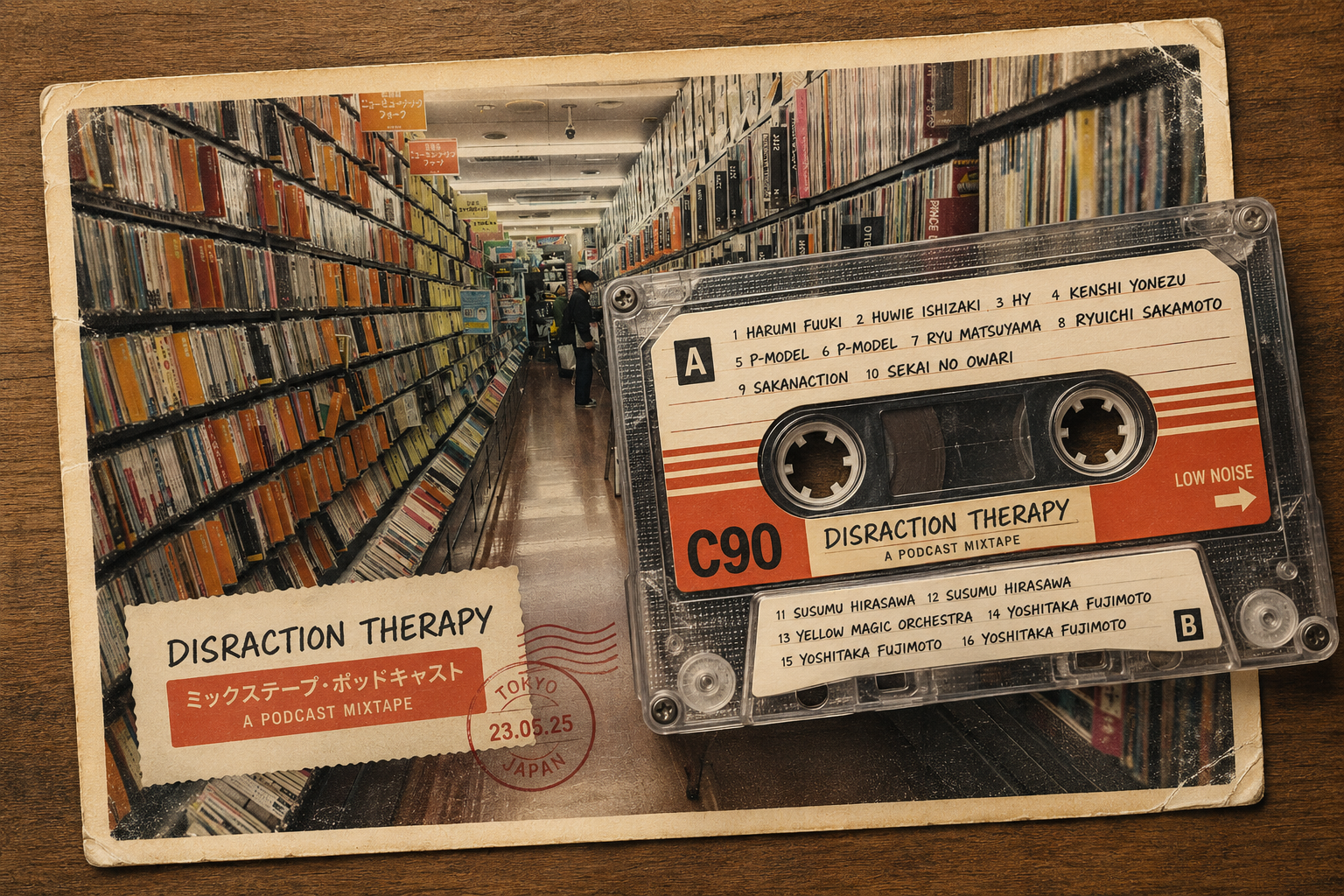
I’ve been listening to a lot of Japanese music lately, so this mix is less a playlist than a map of emotional atmosphere. The tracks gathered here move between electronic abstraction, cinematic melancholy, urban solitude, theatrical surrealism, and moments of fragile hope. Rather than presenting a unified genre, they reveal what cultural theorist Raymond Williams described as a “structure of feeling”: the lived and often difficult-to-articulate emotional texture of a particular historical and cultural moment.
Williams used the term to describe something that exists before it becomes fixed as ideology or convention. A structure of feeling is sensed before it is fully explained. It is the atmosphere of an age as it is lived emotionally rather than formally described. Music is often where these structures emerge most clearly because sound can hold ambiguity, contradiction, longing, and uncertainty simultaneously.
 The emotional terrain of this mix reflects a recurring sensibility within Japanese popular and experimental music from the late twentieth century onwards. There is an enduring fascination with transience, memory, urban alienation, technological mediation, and emotional restraint. These themes appear across very different artists, from Yellow Magic Orchestra and P-MODEL to Ryuichi Sakamoto, Kenshi Yonezu, and Sakanaction. What connects them is not style alone but mood, atmosphere, and orientation toward modern life.
Part of this sensibility emerged during Japan’s period of rapid urbanisation and technological optimism in the seventies and eighties. Genres such as city pop and technopop became associated with metropolitan life, consumer technology, night driving, neon-lit districts, and a sense that the future had already arrived. Yet beneath the polished surfaces there was often melancholy and distance. Contemporary listeners frequently describe these sounds as carrying “retro-futurist melancholy”, a feeling of longing for futures that never fully materialised.
That emotional contradiction runs throughout this mix. The music repeatedly inhabits liminal states. Susumu Hirasawa’s work occupies a threshold between ritual and machine consciousness. Yellow Magic Orchestra turn synthetic sound into something strangely human. Ryuichi Sakamoto’s “Rain” transforms minimal piano motifs into meditations on impermanence and memory. Kenshi Yonezu’s “Spinning Globe” circles around grief, transformation, and emotional inheritance. Even the more theatrical or playful pieces contain undertones of isolation and longing.
There is also a recurring tension between intimacy and distance. Vocals are often restrained rather than cathartic. Emotional expression emerges indirectly through texture, pacing, repetition, and atmosphere. This reflects broader aesthetic tendencies in Japanese art and literature, where suggestion and absence can carry more emotional weight than explicit declaration. The listener is invited into emotional proximity without complete disclosure.
 Another important feature of this structure of sentiment is its relationship with the city. Urban environments in these tracks are rarely presented as triumphant spaces of modern progress. Instead, cities become dreamlike emotional landscapes filled with passing trains, rain-soaked streets, late-night reflections, glowing signage, and anonymous movement. The city becomes psychological rather than merely physical. This is particularly apparent in Sakanaction, Ryu Matsuyama, and many of the electronic works connected to post-YMO experimentation.
The mix also reveals how Japanese musicians have historically absorbed and transformed global musical influences. American funk, European electronic minimalism, ambient composition, jazz fusion, progressive rock, and synth-pop all appear here, but they are reconfigured into something distinctively reflective and spatial. City pop itself was described not as a strict genre, but as a mood or urban sensibility connected to modern lifestyles and technological change.
What makes this collection compelling now is that these emotional textures resonate strongly beyond their original context. Contemporary listeners encounter these sounds during another period of uncertainty about technology, identity, social fragmentation, and the collapse of earlier promises of progress. The music feels suspended between optimism and exhaustion, intimacy and detachment, movement and stillness. It speaks to contemporary experiences of digital life, memory saturation, and emotional dislocation.
In this sense, the mix does not simply present Japanese music as cultural artefact or nostalgia. Instead, it offers an emotional vocabulary for navigating liminal modernity itself. The tracks create a shared emotional architecture built from ambiguity, longing, gentleness, estrangement, and moments of quiet transcendence. They form a structure of sentiment that remains unfinished, unresolved, and therefore alive.
The result is music that does not demand certainty from the listener. It allows contradiction to remain audible. It accepts incompleteness. In a period increasingly defined by acceleration, noise, and ideological rigidity, that may be precisely why these sounds continue to matter.
The track list draws together a distinctly Japanese ambient, art-pop, progressive electronic, and reflective cinematic sensibility, combining anime and film soundtrack composition with avant-pop, Shibuya-kei, experimental synth work, and emotionally introspective songwriting. The selection suggests a mood that moves between melancholy, dreamlike nostalgia, urban reflection, and surreal theatricality.
Harumi Fuuki – “Fed up with love”
A short instrumental cue from the soundtrack to the Japanese television drama My Love Mix-Up!, composed by Harumi Fuuki, a noted film and television composer known for emotionally nuanced orchestral work. The piece appears to function as a reflective or comic-romantic interlude within the drama soundtrack, carrying understated melancholy and light chamber instrumentation. Fuuki’s soundtrack work often balances intimacy with whimsical emotional pacing. (YouTube)
Huwie Ishizaki – “Dame Ningen”
The title roughly translates as “Useless Person” or “Hopeless Human,” reflecting Ishizaki’s tendency toward emotionally vulnerable songwriting. The track combines confessional indie-rock songwriting with poetic self-deprecation and understated arrangement. Ishizaki is recognised for delicate lyrical phrasing and emotionally exposed vocals that explore uncertainty, alienation, and personal fragility. (YouTube)
HY – “I Just Do It For You (Rerecorded)”
HY are known for emotionally direct Okinawan pop-rock ballads combining folk-pop accessibility with strong melodic sentiment. This rerecorded version likely revisits one of their softer romantic compositions, emphasising mature reflection and emotional continuity rather than youthful intensity. HY’s music often centres themes of loyalty, separation, memory, and perseverance.
Kenshi Yonezu – “Spinning Globe”
Written as the theme song for Hayao Miyazaki’s The Boy and the Heron, this chamber-pop composition carries a bittersweet and elegiac quality. Yonezu reportedly wrote the piece as both a response to the film and a personal tribute to Miyazaki’s influence on his life. Critics and listeners frequently describe the song as melancholic, emotionally expansive, and deeply cinematic, built around piano, orchestral textures, and restrained vocal delivery. (Wikipedia)
P-MODEL – “LICORICE LEAF (2025 Remastered)”
P-MODEL, led by Susumu Hirasawa, were pioneers of Japanese technopop and progressive electronic music. “Licorice Leaf” reflects the band’s mixture of rigid sequencer rhythms, angular synth structures, absurdist lyrical imagery, and futuristic dystopian aesthetics. The remastered edition likely sharpens the mechanical precision and layered analogue textures characteristic of their early work.
P-MODEL – “Ohayo (2021 Remaster)”
One of P-MODEL’s more accessible and rhythmically propulsive tracks, “Ohayo” combines bright synthetic melodies with ironic detachment and hyperactive electronic arrangements. The song embodies the late analogue-era Japanese synth underground, bridging post-punk experimentation with technopop optimism and social satire.
Ryu Matsuyama – “You, As Always”
Ryu Matsuyama’s work blends Japanese indie songwriting with European jazz-pop and cinematic piano textures. “You, As Always” carries a reflective and emotionally restrained atmosphere, often associated with themes of continuity, longing, and urban solitude. Their sound is notable for multilingual and transnational influences, giving the music an unusually cosmopolitan emotional tone.
Ryuichi Sakamoto – “Rain”
Originally associated with The Last Emperor soundtrack, “Rain” is among Sakamoto’s most recognised piano-led compositions. The piece combines minimalist repetition, melancholic harmonic movement, and restrained orchestral ambience. Sakamoto’s work frequently explores memory, impermanence, and emotional stillness, and “Rain” exemplifies his ability to fuse classical composition with cinematic introspection.
Sakanaction – “Montage”
Sakanaction are known for combining indie rock, electronic dance rhythms, progressive pop structures, and introspective lyricism. “Montage” has a fragmented, cinematic quality suggested by its title, likely moving between layered textures and rhythmic shifts. Their work often evokes urban alienation, nocturnal movement, and emotional ambiguity within contemporary Japanese city culture.
SEKAI NO OWARI – “Honootomorinocarnival”
The title translates approximately as “Carnival of the Flame Forest.” SEKAI NO OWARI frequently combine fantasy imagery, theatrical pop production, and childlike wonder with darker emotional undercurrents. The track likely carries a surreal carnival atmosphere, balancing whimsical instrumentation with emotionally ambiguous storytelling and elaborate sonic layering.
Susumu Hirasawa – “GHOST BRIDGE”
Hirasawa’s solo work often explores transcendence, digital consciousness, memory, and metaphysical landscapes through layered electronic composition and ritualistic rhythm structures. “GHOST BRIDGE” suggests a liminal crossing point, characteristic of his recurring themes of transition between psychological or spiritual states. His music often feels simultaneously futuristic and mythological.
Susumu Hirasawa – “Nurse Cafe”
“Nurse Cafe” combines Hirasawa’s surrealist lyrical tendencies with tightly programmed electronic arrangements and unusual melodic phrasing. The track likely inhabits the strange intersection between medical imagery, consumer culture, and dream logic that frequently appears in his work. There is often an unsettling but playful theatricality in these compositions.
Yellow Magic Orchestra – “Nanga Def_ (Remastered 2020)”
Yellow Magic Orchestra were foundational to global synth-pop, techno, and electronic music. “Nanga Def?” reflects their interest in digital fragmentation, sampled media culture, and playful deconstruction. Even decades later, the track feels modern in its manipulation of rhythm, synthetic voice textures, and fractured electronic composition.
Yoshitaka Fujimoto – “Beginning of Youth (Piano Ver.)”
A delicate piano arrangement centred on nostalgia and emotional recollection. The title suggests themes of memory, transition, and formative emotional experience. The stripped-back piano version likely foregrounds melodic simplicity and reflective mood rather than dramatic orchestration.
Yoshitaka Fujimoto – “Marukawa Town”
This piece appears to evoke small-town atmosphere and everyday emotional landscapes, possibly drawing from anime or cinematic soundtrack traditions. The composition likely uses gentle melodic phrasing and ambient harmonic textures to create a sense of place and quiet familiarity.
Yoshitaka Fujimoto – “Things That Watch Over the City”
The title suggests observational or guardian-like imagery, combining urban atmosphere with reflective ambient composition. The track likely functions as a contemplative cinematic piece, balancing stillness, memory, and subtle emotional tension through restrained instrumentation.
Taken together, the playlist suggests a coherent aesthetic trajectory moving through dreamlike electronic modernism, reflective Japanese art-pop, cinematic melancholy, and surreal urban emotionality. There is a strong emphasis on liminality, introspection, memory, and altered emotional states rather than overt narrative momentum.
Leave a Reply